Garage Clear-Out Scope: What to Tell a Skip Bin Provider
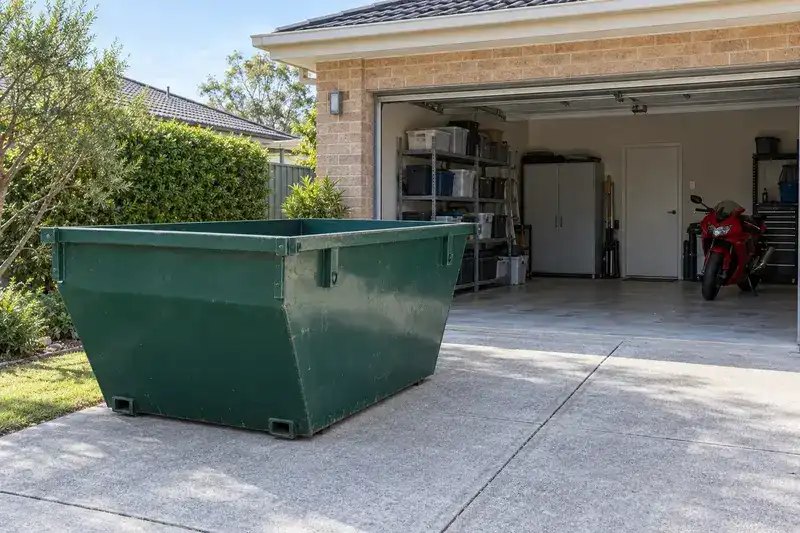
A garage clear-out scope describes the items you want removed, the arrangements already made and the questions a provider still needs to answer. Prepare it before choosing a bin from a photograph or assuming everything in the garage belongs in the same load. The contents of the job matter as much as the amount of space they occupy.
Start with an accurate description of the garage as it is today. Some belongings may stay, some usable items may leave through another arrangement and some materials may need specialist advice. A clear enquiry helps you establish which part of the job a skip-bin provider can assess and what must be organised separately.
If your first thought is 'I need to sell my motorbike as part of this clear-out', give the whole vehicle its own enquiry. Do not assume that a general skip booking includes collecting or accepting a motorcycle. Keep that arrangement separate while describing the ordinary waste proposed for the bin.
Decide what is leaving before describing the load
Make an initial list of recognisable items and groups. Include ordinary furniture, damaged storage items and other belongings you are considering removing. Mark what you intend to retain so it does not become part of the waste estimate simply because it is currently in the same room.
Check ownership before assigning a destination. Shared household equipment, borrowed tools and someone else's stored belongings need the relevant person's decision. A clear-out is not permission to discard everything that appears unused. Record an unresolved ownership question rather than making it disappear into the rubbish list.
Usable goods intended for another person or organisation need a confirmed arrangement too. An intention to donate something does not establish that a recipient will accept it or collect it on your preferred date. Keep those items out of the proposed bin contents until you understand what will actually happen.
The list can remain simple: item, owner, intended destination and next action. Once those decisions are clearer, the skip enquiry can describe the remaining load without mixing it with belongings that are staying or leaving another way.
Describe contents by item and material
Avoid using 'garage rubbish' as the entire description. Tell the provider what the load contains in plain terms. An old wooden cabinet, empty cardboard cartons and an appliance are different items even when they occupy the same corner. If you do not know a material or the contents of a container, say so.
Ask which waste category applies to the specific load and which items are accepted under that booking. Do not assume that an item appearing in a general online list is included in your particular service. Keep the provider's answer with the enquiry so the household follows the same information.
Paul's Rubbish Removal skip-bin guide illustrates why contents and service category need to be considered together. Its NSW-specific rules do not determine a Melbourne booking. Confirm acceptance and requirements directly with the provider handling your job.
Photographs may help explain ordinary visible contents where the provider requests them. Include enough context to show what is being discussed, while keeping private papers and unrelated identifying details out of the images. A photograph supplements the description; it should not hide an uncertain item behind other belongings.
Keep whole vehicles and specialist questions separate
A motorcycle or another whole vehicle should remain on the separate-arrangements list unless an appropriate provider has explicitly assessed the job. Describe its location and condition accurately. Do not dismantle it or attempt unfamiliar movement to make it look like ordinary household waste.
Other garage contents can raise specialist questions as well. Batteries, chemicals, unknown containers, fuel-powered equipment and unfamiliar building materials should not be included in a general load through assumption. Ask the appropriate provider or local service about the specific item before handling or placing it in a bin.
If something appears damaged or unsafe, seek appropriate advice rather than trying to identify it by opening, smelling, draining or breaking it. This article is about the enquiry and scope of the clear-out. It does not provide hazardous-material handling, machinery preparation or disposal procedures.
Keep the description honest even when an item complicates the plan. Concealing it inside a box or calling it something more general does not resolve the question. An unresolved item needs a suitable next step outside the ordinary loading plan.
Show the provider the volume you can actually explain
Once the proposed contents are identified, describe their approximate extent. Give the dimensions of larger ordinary items where you can appropriately verify them, and explain whether the visible group is the whole load or only the part you have assessed so far.
Do not estimate from the total garage floor area alone. Shelving, retained vehicles and empty space are not all waste. Equally, a photograph from one angle may leave out a second group of items. Tell the provider what is included in the estimate and what remains to be checked.
Our guide to choosing an appropriate skip-bin size provides background for the enquiry. The actual recommendation should be based on the confirmed contents, the provider's available service and the limits applying to the booking, rather than a universal answer for every garage.
If the job is still being sorted, make that clear. You can ask what information the provider needs to assess it properly. This is more useful than selecting a bin first and trying to fit an evolving job into the original assumption afterward.
Explain access and the proposed placement
Describe the property access before booking. Mention the proposed location, driveway conditions, narrow entrances and anything else that could affect delivery or collection. Report what is present rather than assuming the delivery vehicle can use the same space as your household car.
Ask the provider to confirm what access and placement arrangements are suitable. If a proposed location raises permission or council questions, clarify them through the relevant provider and authority before relying on it. Do not treat a neighbour's previous booking as proof of what applies to your property.
Also consider how the household will use the property while the bin is present. Explain any access that must remain available and any other appointments planned for the same period. A vehicle collection and a bin delivery may need coordination, especially if both depend on the same driveway.
Keep the agreed arrangement distinct from your first suggestion. A point marked on a photograph is a proposed location until it has been assessed and confirmed. Update the plan if the provider identifies a different suitable approach.
Confirm what the booking includes
Ask whether the service is bin delivery and collection, a loading service or another arrangement. These are practical differences that should be understood before the appointment. Do not assume the presence of a truck means someone will clear the garage or load heavy items for you.
The Red Rabbit comparison of skips and rubbish removal provides a general introduction to different service approaches. Use the distinction to ask about the actual scope offered. Its provider-specific prices, timing and claims do not establish what another service includes.
Confirm the relevant contents, loading limits, hire period, collection process and how to raise a change or question. Obtain the provider's current information for your booking. Our overview of booking skip bins in Melbourne offers further reading on organising the enquiry.
If you cannot appropriately manage part of the work, explain that before booking. Ask about a suitable service rather than planning to improvise when the bin arrives. Clear scope is useful only when the tasks assigned to the household are understood as well as the tasks assigned to the provider.
Plan ordinary sorting around separate appointments
Keep the accepted bin contents distinguishable from retained belongings, usable goods awaiting another recipient and items needing specialist advice. The purpose is not to create elaborate piles; it is to prevent one group's status from being confused with another's.
Record the current status of separate appointments. 'Enquiry sent' and 'collection confirmed' should be different entries. If a motorcycle collection has not happened, preserve the access it requires rather than arranging the whole clear-out around an assumed empty space.
Tell the relevant providers when one appointment affects another. If the driveway arrangement changes, or a collection is delayed, ask how to revise the booking. Do not move an unresolved item into the bin simply to keep the original timetable looking intact.
Update the scope when new items appear
Sorting often reveals items that were not visible in the initial enquiry. Pause and update the description if the proposed contents change. A provider's earlier answer about one load should not be stretched to cover a different material or an additional category without checking.
Keep uncertain items outside the accepted loading plan until the question is resolved. If the provider asks for more information, supply an accurate description through the appropriate channel. Do not disguise the item, alter its label or rely on its small size as a reason to ignore the uncertainty.
The same principle applies if the load becomes smaller because usable goods are collected elsewhere. Tell the provider what has changed and ask whether the arrangement needs revision. A current scope is more valuable than a carefully written description that no longer matches the garage.
A fictional clear-out with three arrangements
Imagine a household clearing a garage containing an unused motorcycle, ordinary household items and sports equipment a relative may want. They first confirm ownership. They then make a separate vehicle enquiry, check what the relative will collect and describe the remaining proposed waste to a skip-bin provider.
An unfamiliar container is found behind the shelves. It is recorded as an unresolved item for appropriate advice, without being placed in the planned load. When the relative confirms a smaller collection than expected, the household updates the waste description rather than assuming the original assessment still covers everything.
This fictional example is not a customer account or a promise that any provider will accept the described job. It shows why a garage clear-out may involve several destinations. The skip booking becomes clearer because the separate arrangements remain visible.
Review the remaining garage and next use
After the confirmed collections, compare the remaining items with the list. Check which belongings are staying, which questions remain open and whether any separate arrangement still needs action. The end of one collection does not automatically mean the whole garage job is complete.
Our recycling guidance for Melbourne residents provides further background for ordinary household planning. For any particular material, use current local service and provider information rather than assuming a general article confirms its destination.
Finally, decide what the cleared space needs to do next. Retained belongings should have understood locations, and unresolved items should have a next action. This keeps the result from becoming another temporary holding area for decisions that were never completed.
Give the provider an accurate job to assess
A good garage clear-out scope identifies the proposed contents, explains access and keeps whole vehicles and specialist questions separate. It distinguishes a requested arrangement from a confirmed booking and changes when the job changes.
Describe what you have, ask what the provider can accept and organise the remaining destinations deliberately. That gives the clear-out a practical structure before delivery, loading or collection begins.

Samantha Greaves
Samantha Greaves is an expert in waste management solutions, dedicated to helping residents and businesses in Melbourne find efficient and eco-friendly ways to manage their waste. With a passion for sustainability and a wealth of knowledge in the rubbish removal industry, Samantha provides valuable insights and practical advice on skip bin services, recycling, and responsible disposal methods.
Popular Posts
Garage Clear-Out Scope: What to Tell a Skip Bin Provider
![Empty green skip bin on a suburban driveway beside an open garage with storage shelves and a red motorcycle parked separately]() A garage clear-out scope describes the items you want removed, the arrangements already made and the
A garage clear-out scope describes the items you want removed, the arrangements already made and the
 A garage clear-out scope describes the items you want removed, the arrangements already made and the
How to Manage Waste Removal During a Commercial Demolition in Melbourne
![]() Waste planning should start before the first wall comes down. A well staged commercial demolition me
Waste planning should start before the first wall comes down. A well staged commercial demolition me
 Waste planning should start before the first wall comes down. A well staged commercial demolition me
Demolition Melbourne: Professional & Reliable Services
![]() Preparing a block of land for a new build or major renovation is a significant step. It requires a c
Preparing a block of land for a new build or major renovation is a significant step. It requires a c
 Preparing a block of land for a new build or major renovation is a significant step. It requires a c
Sustainable Waste Solutions in Melbourne
![Eco-Friendly Waste Disposal Options in Melbourne: A Guide to Sustainable Skip Bin Solutions]() What if your waste disposal choices could significantly impact the environment? In a city like Melbo
What if your waste disposal choices could significantly impact the environment? In a city like Melbo
 What if your waste disposal choices could significantly impact the environment? In a city like Melbo
